The Writer’s Dopamine Menu: An ADHD-Friendly Grab Bag to Prevent Writer’s Block & Spark Creativity

Have you ever sat down at your word doc (or thought about sitting down), only to feel an invisible and very heavy obstacle—maybe a mountain or a grand piano or a baby elephant—bulldoze into your path?
You know the words will flow once you get going, but the act of starting is just physically impossible. So, what does your brain do? It seeks safety from the under-stimulating weight of doing literally anything else. Before you even realize you’ve made a choice, you’re deep into a mindless social media scroll or you’ve rearranged your sock drawer by color, and now you’re feeling a wave of guilt wash over you.
You want to work on your book. You just can’t.
If this cycle feels familiar, take a deep breath! I’ve got you. I am you! This is not a discipline problem. It’s just how our brains are wired.
Let’s talk about the science behind why this happens (because I am a bit nerdy + I like to take things apart and see how they work) and how to build our own personal dopamine menus to trick your executive function back into play.
The Science Behind Why Your Brain is Refusing to Write
An ADHD or neurodivergent brain operates with a baseline deficit in dopamine (the neurotransmitter responsible for motivation, focus, anticipation, and reward). For a typical brain, the long-term reward of “finishing a book” provides enough sustained dopamine to get through a tough writing session.
But an ADHD brain doesn't track future rewards well. For us, a task must provide immediate novelty, high interest, or an instant sensory payoff to trigger executive action.
When a chapter draft feels too high-stakes, confusing, or just plain boring, your executive function lapses. Your brain panics because it sees a massive energy expenditure with zero immediate dopamine return.
So, it drags you toward quick-hit stimulation elsewhere.
So what can we do about this?
To bypass this task avoidance, we can't rely on raw willpower. Willpower is a finite resource that runs out fast when fatigue sets in. Instead, we have to lower the barrier to entry by tricking our brains with immediate sensory novelty.
The Writer’s Dopamine Menu: An ADHD-Friendly Grab Bag to Prevent Writer’s Block & Spark Creativity
A Dopamine Menu is a curated, pre-written list of effortless creative starters, sensory triggers, and low-stakes experiments that you put together before executive dysfunction strikes.
Think of it as an emergency kit. When you sit down to write and your brain screams absolutely not, you don't force it. You don't berate yourself. You simply peek your menu, pick one instant, low-friction “snack,” consume it, and let your neurochemistry shift back into a state of creative play.
HOW TO FILL OUT & USE YOUR MENU
Keep it friction-free. Fill this menu with things you actually love (and not things you think you should do). Then, break in case of emergency. The next time your brain says absolutely not to writing, don’t force it! Open this doc, pick one “hack,” consume it, and watch your creativity spark to life.
1. BITE-SIZED “HACKS”
Here we want to list low friction tricks to visually and physically stimulate your brain into a state of novelty.
Make a list of visually absurd or completely different fonts you can switch to just to temporarily break the visual monotony of your doc.
Why it works: Your brain can become over-familiar with the visual layout of your standard font (like Times New Roman or Garamond), which tricks your brain into seeing it as a high-stakes, unchangeable + final product. Switching your draft to an unexpected, stylized, or even cursive font instantly breaks that visual familiarity. It registers as a low-stakes playground to your neurochemistry, melting away perfectionism so you can just dump the words out.
Because I edit in TNR all day and it feels way to serious and final drafty, in my own writing, I need to use Arial or the plain old system sans font.
What is a physical sensation you can introduce that you use only during writing sessions to signal to your brain it’s time to play (this might be things like: a fidget toy, weighted blanket, specific candle, etc)?
Why it works: By lighting a specific candle scent, putting on a weighted blanket, or holding a specific fidget stone only when it is time to write, you’re leveraging good ole classical conditioning. You’re bypassing the executive bottleneck entirely by giving your brain an immediate physical, pleasant reward, which builds an automatic sensory trigger for focus over time.
I have a writing coat! I sprayed it with perfumes that smell like moss and sea kelp (quite literally) + I keep it near while I’m working on my book.
Make a list of emergency spots in your house or neighborhood that you can physically move your body to when your main writing space feels uninspiring (ex: sitting backward on the couch, the living room floor, a specific park bench, coffee shop).
Why it works: Our brains associate physical environments with specific behavioral loops. If you’ve spent the last hour at your desk feeling frustrated, anxious, or scrolling social media, your brain has officially tethered that exact desk chair to the feeling of failure and under-stimulation. Physically picking up your laptop or notebook and moving to an unconventional spot instantly shatters that negative environmental loop. The change in physical posture, line of sight, and spatial acoustics registers as an immediate chemical "reset." It lowers your cortisol levels and tricks your brain into thinking it is embarking on a fresh, low-stakes adventure, making it safe to open the document again.
I personally have a laptop that I use only for writing. It’s pink and makes me happy. Otherwise the 9 million tabs for Burgeon client work + BTS work stare at me and add too much pressure.
2. NOSTALGIC STIMULATORS
These are quick external media injections to instantly remind you of the specific feelings, tropes, and aesthetics that made you fall in love with storytelling in the first place.
What books, movies, or TV shows did you consume that made you first think, “I want to make people feel like this”?
Why it works: It’s easy to lose sight of why you’re even writing in the first place, the feeling that made you want to be a storyteller in the first place. Stepping away and interacting with the specific book or movie or tv show that made you want to write acts as a reset button, manually bypassing your cynical, over-critical voice and reminding your nervous system the exact magic, tone, and resonance you’re trying to create. It shifts you from the obligation of writing a book and anchors you back into the joy of creation.
Identify specific books or movies that perfectly execute the exact pacing, banter, or emotional tension you want your own work to have (Watch or read these when your work feels flat).
Why it works: Reading a few pages of an author whose voice, prose, or dialogue you deeply admire serves as a tuning fork. It bypasses the agonizing struggle of trying to conjure style out of thin air by instantly reminding your brain what great storytelling sounds and feels like.
3. PROJECT SPECIFIC INSPIRATION
Project specific creative inputs that keep you tethered to your current project while gathering fresh inspiration.
Make a list of books that completely nailed a specific element that you may struggle with (ex: worldbuilding, pacing, romantic tension).
What specific songs, albums, or ambient soundscapes immediately drop you into the emotional climate of your current project?
Why it works: Music and ambient noise deliver immediate dopamine. Putting on an intense character playlist or a rain-slicked ambient soundscape isolates your auditory processing from real-world distractions and can acts as an immediate emotional shortcut, dragging your subconscious straight into the climate of your setting without requiring too much heavy cognitive lifting.
Lately, I swear by a Stray Kids lofi playlist on YouTube, but it used to be the Lady Bird soundtrack for a long while. Whatever works, my friend!
What are your absolute favorite, most indulgent, even trashiest literary tropes? Why do you like them?
Why it works: Sometimes we forget that writing and reading can be fun and that we’re allowed to write our favorite type of content. :)
4. ZERO-STAKES PLAY
Guilt-free cleansers for when your book feels too terrifying or high-stakes.
List your absolute favorite comfort media, hobbies, and low-pressure real-world activities that fill your creative well without requiring analytical brainpower (ex: tv shows, cozy video games, visiting a museum, going for a walk, baking, drawing, etc).
Why it works: Sometimes a productive writing day is about refilling your creative well so that you don’t burn out. Pushing past a cognitive dead-end drains your willpower. Engaging in a sensory, low-stakes hobby without a deadline gives your analytical brain a break, letting your subconscious process your story ideas in the background.
Brainstorm a list of effortless, easy-access points or scenarios you can use to mess around with your characters or world when the actual act of writing feels too much (ex: writing a silly spin off scene, filling out a fake diary entry, detailing a background character, using prompts).
Why it works: Perfectionism thrives on the fear of ruining your manuscript. Shifting to an unofficial, non-canon sandbox detaches your brain from the pressure of performance. Because these exercises can’t fail or ruin your plot, your brain registers the task as safe, low-stakes play. This dissolves anxiety, gets your fingers moving on the keyboard, and builds creative momentum.
Stop fighting your neurochemistry, friend.
Your creative voice doesn't thrive under a rigid, neurotypical schedule that forces you to write 500 words every single day at 6:00 AM. For many of us, our brains just don't work that way.
Instead of fighting your natural cognitive cycles, what if you learned to build a safe harbor for your hyperfixation? Hyperfixation gets a bad rap because it can feel chaotic, but when channeled intentionally, it is an absolute creative superpower. When your brain enters a deep flow state, you can make literary connections, write immersive prose, and solve complex structural plot holes faster than anyone else in the room.
The secret isn't trying to stop your hyperfixations. Instead, let’s using your Dopamine Menu to gently invite them in when you have the time and space, and creating a soft landing for yourself so you don't burn out when the wave recedes.
If your brain is refusing to cooperate with your manuscript today, stop trying to muscle through the wall. Lower the stakes, offer your brain a sensory reward, and let yourself play your way back into the flow.
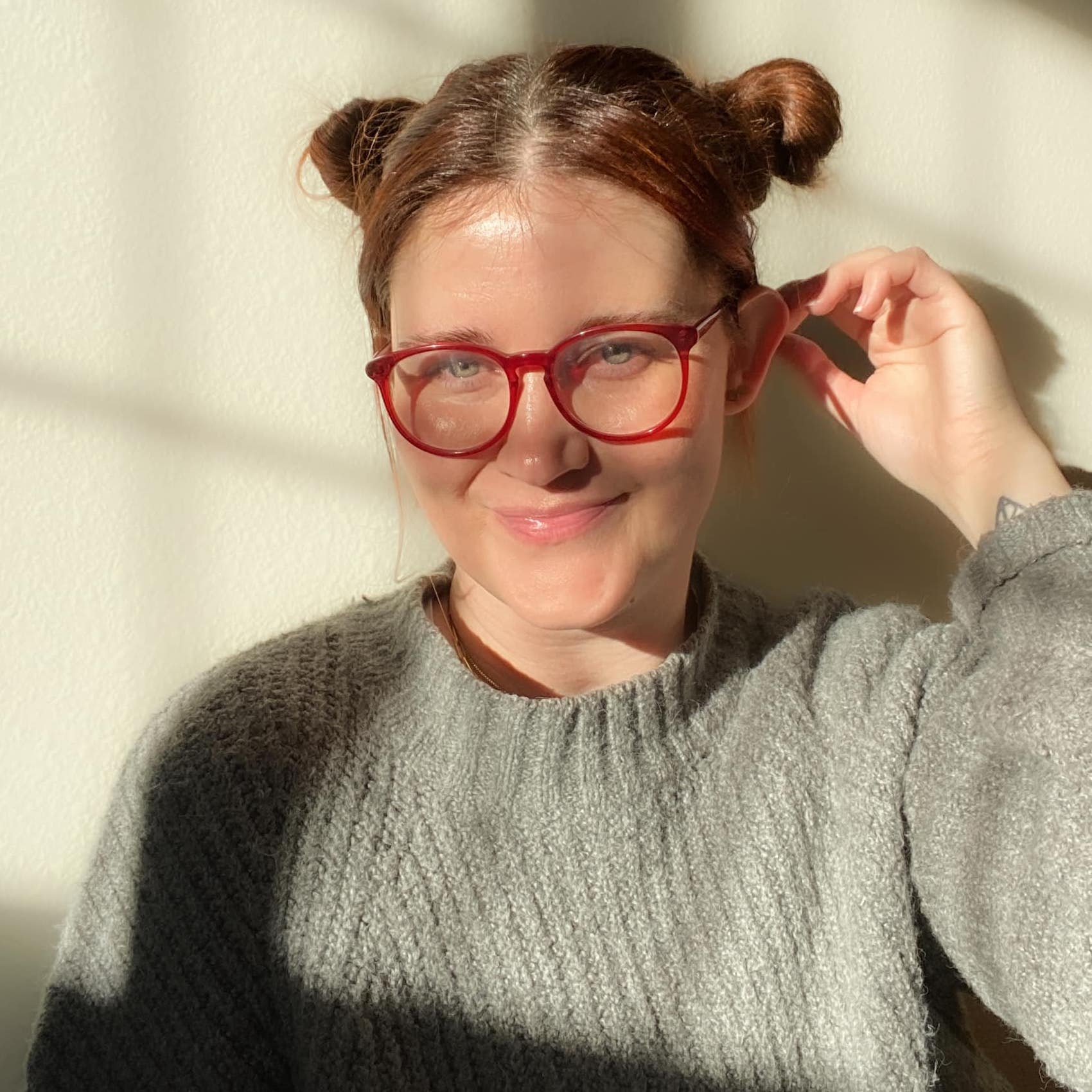
Tiffany Grimes (she/they) is the founder of Burgeon Design and Editorial, a queer founded boutique editing and design house for brave creatives. At Burgeon, we specialize in book editing, coaching, and web design for the individualists, nonconformists, and trailblazers of the literary world. If you’re a maverick, outsider, rebel, renegade, dissenter, disruptor, or free spirit, you’ve come to the right place.