If you spend more than five minutes on the writer-side of social media, you’ll notice a recurring theme lately. Dolly Parton’s internet is absolutely flooded with authors sharing their heartbreaks, anxieties, and fears about working with editors and navigating the behind-the-scenes of publishing.
When you listen closely, the fears sound something like this:
“What if my editor over-edits or changes things that completely ruins my vision?”
“Why do I have to spend so much time vetting a freelance editor?”
“How do I know my editor won’t just run my words through AI?”
“What do I do if my publisher isn’t marketing my book?”
“What do I do if my acquisitions editor is completely unresponsive?”
If you found yourself vigorously nodding along to posts like these or if you’ve felt that exact same knot of anxiety tightening in your stomach, I understand.
Your manuscript is your heart on the page, and handing it over is terrifying. Because the inner works of traditional publishing are often kept behind closed doors, writers are feeling deeply vulnerable, trying to navigate an industry that can feel incredibly opaque and maybe even a bit predatory toward writers.
But as a professional book editor, I want to invite you into a different perspective. You don’t have to be a passive bystander in your own writing career, and you don’t have to view publishing as a battleground.
Let’s talk about how to manage expectations, protect your creative agency, and build a creative partnership that actually honors your work.
How to Keep Creative Control Over Your Book (Without Ruining Your Publishing Career)
1. You’re the Creative Director (Stop Giving Up Your Power)
The most important fact you can carry into this industry is this: You have the final say. Always.
Somewhere along the way, we’ve been conditioned to give up our agency, our vision, and our creative power to random people on the internet, critique groups, or even our editor or agent. But your book belongs to you.
For the love of god, please protect your manuscript from generic writing advice found online. Those cookie-cutter, rigid rules were never meant to be copy-pasted into the unique heart of your story. In fact, trying to force your work into those mainstream templates often strips away the very thing that makes your voice special. Writing rules are meant to be broken.
Especially if you’re an underrecognized writer whose voice, character dynamics, or perspective doesn’t mirror the mainstream writing standards. The generic rules are not for your gorgeous book. Let’s stop shrinking our stories to fit a template that wasn't built for us in the first place.
Be incredibly wary about where the advice is coming from. On social media, you’ll notice how folks will take one highly specific circumstance or single publishing experience and try to apply it broadly to everyone. But publishing doesn’t work like that. It never has. What applied to one manuscript or author likely won’t apply to another. Every author's career path and every single manuscript follows its own distinct, unrepeatable trajectory.
Traditional publishing is an apprentice-driven economy. Literary agents learn by working under other agents, absorbing highly subjective tastes, personal preferences, and localized agency cultures. There is no single, standard handbook everyone is following.
Book editing is incredibly similar. The barrier to entry in the freelance world is practically non-existent; anyone can wake up, call themselves an editor because they love to read, and set up shop without industry experience or foundational training.
2. Writing is Subjective (Your Editor is a Partner, Not a Robot)
Somewhere along the way, writers became convinced that hiring a freelance editor is like buying some sort of premium plugin. You pay your fee, you upload your file, and a flawless, objectively perfect product pops out the other side. Somehow the editor was able to read your mind and make sure everything is exactly the way you intended.
But editing is a collaborative process. And “good writing” is entirely subjective.
What one person views as a major pacing issue, another might view as a beautifully slow-burning character arc.
When you look for an editor, remember that you aren't paying for an objective, robotic fact-checker whose job is to judge you or agree with everything you say. If you’ve vetted your editor properly, you’re investing in a highly trained, deeply experienced human brain to look at your book and give you a dedicated perspective on how a reader will receive it. It is opinion, meant to be a conversation.
In my own work, I provide suggestions based on my years embedded in this wild industry—through my own projects, my clients’ lived experiences, and ongoing research. I take this responsibility very seriously. But I don't know everything, because nobody does. My job is to share what I know so that we can look at the map and come to a decision together.
No matter what an editor recommends about your pacing, worldbuilding, or character arcs: your name is the one going on that cover. You hold the keys. If an editor ever suggests a change that fundamentally breaks your vision or suffocates the soul of your story, you have every right to reject that change.
I never want a passive client who blindly accepts every track-change I make. I want you to feel empowered, to trust your gut, and to fully own your creativity. In fact, about 70% of what I do as an editor and book coach is simply reminding my writers to trust their own intuition.
3. Yes, we’re in a literary crisis, but—
Let’s address the elephant in the room right now: writers are terrified.
Every week, there’s a new headline or panic about AI and the current literary crisis. We hear about declining attention spans and publishing houses playing it safe. In fact, a literary agent recently told one of my writers that her book was “too complicated for today’s readers.”
RIP to that agent’s taste, because that is absolutely not the move!
Publishing has always played it safe. It’s a business! They want to sell books. Let’s not dumb down our books and try to write for the non-readers who were never going to buy the book in the first place.
And when gatekeepers demand simple, predictable, algorithm-friendly books, it’s underrecognized writers who get hit first and hardest. Words like “complexity” and “marketability” get thrown around as an excuse to shut down diverse voices because they’re terrified to take a risk.
There are 8 billion people in the world. Most people maybe read one book a year. But to the readers who are starting to read because they finally found a genre that works for them—hello romantasy and dark romance explosion!—that’s a beautiful thing!
And the lifelong readers who crave complex, deep stories? They’re still there.
Your job as an author isn’t to dumb down your work to please some hypothetical non-reader. Write that spectacular, un-compromised book for the readers who are meant for you.
4. Publishing is a business (It’s Capitalism All the Way Down)
Once we decide we want to be published, we have to look at our art through a slightly different lens. We have to consider the market, the target demographic, and the actual human reader who will eventually hold our pages. Because of this, we have to extend a baseline level of trust to our editors, agents, and publishers. They know the industry. They know what is selling, how retail operates, and how books actually move off of shelves.
The secret is finding a healthy, sustainable middle ground. We don’t want to passively comply with every single suggestion, but we can’t let defensive skepticism close us off from growth either.
Instead, let’s think critically. If your publishing team suggests a major structural change, try not to let fear or immediate defensiveness drive your reaction. Take a breath, and step into an active, collaborative conversation. Ask questions. Make sure you both understand the why behind the decision. Ensure they understand your ultimate vision so that, together, you can find a beautiful way to align your artistic integrity with commercial market realities. You’re always allowed to have an opinion—protecting your work is simply about keeping the dialogue open and professional.
5. Vetting is Your Ultimate Safety Net (Why Wouldn’t You Want to Vet Your Partners)
One of the loudest frustrations I see online is the time-suck of having to manually reach out to freelance editors, chat with them face-to-face, and wait for sample edits. In a world accustomed to instant gratification, this slow, deliberate matchmaking process can feel exhausting.
As an editor, I only have a select few spots for 1:1 clients each year, meaning I have to vet projects carefully to ensure your book is something I can pour my absolute heart and soul into. It takes hundreds of hours to edit a book—which is exactly why professional editing is a significant investment.
Think of it a bit like dating. Not every editor is going to be the perfect match for every writer, and sometimes it takes a little time to realize you aren't fully compatible. That is completely okay, and it is neither person's fault. Every editor brings their own unique way of providing feedback, teaching, and communicating.
You aren’t marrying them! It is entirely normal, and highly encouraged, to shop around until you find the person who speaks your story's language.
Knowing how to vet a freelance editor is exactly how you protect your creative agency.
Because editing is so deeply collaborative and subjective, I need to see your book (and not just the first chapter) and I need to talk to you face-to-face to make sure we share a vision for your book and that we’ll actually enjoy working together.
Learning how to step into a 1:1 space and advocate for your manuscript is an incredibly valuable skill you can hone. And if you’ve been underrecognized or underrepresented in publishing, vetting your partners is how you can build a protective wall around your story’s cultural, emotional, and narrative truth.
This process is a way to protect both of our creative energies from falling into the wrong hands.
6. Your Survival in Publishing Depends Entirely Upon You
Collaborative relationships are the bedrock of this industry. If we struggle to navigate a creative partnership with a freelance editor who is explicitly on our team, the broader publishing world can feel incredibly overwhelming.
Will standing in your power sometimes mean choosing not to sign with a specific agent, or skipping a contract with a certain imprint because they don't align with your values? Absolutely. But when we enter into publishing contracts, we’re joining a team.
It’s time to step into our power as the creative director of our own publishing career, my friend. Trust yourself and your team.
Let’s revisit those fears we talked about at the beginning and look at them through our new, empowered lens.
What if my editor over-edits or changes things that completely ruins my vision?
You’re in charge of your vision, my friend. You don’t have to accept any changes if you don’t want to. Editors aren’t some mean supervillan out to get you. Most editors will actually try to over-help you out of sheer enthusiasm for your manuscript. They mean well and want your book to succeed as much as you do. Take a deep breath, try to understand their intent, and remember you always have the free will to hit “reject change.”
Why do I have to spend so much time vetting a freelance editor?
Editing is an intimate, long-term creative partnership. Your story is too valuable to hand over to just anyone. Spending that extra time vetting ensures you’re pairing up with someone who genuinely speaks your book’s unique language. And remember: a good editor is vetting you right back to make sure they’re truly capable of serving your book, because nobody should be taking your money just for the sake of a paycheck.
How do I know my editor won’t just run my words through AI?
A professional editor who values human storytelling won’t hesitate to add an anti-AI clause to their contract, if they don’t already have one.
What do I do if my publisher isn’t marketing my book?
Traditional publishers focus primarily on B2B distribution (the logistics of getting physical books into bookstores), not individual B2C marketing. Building a direct connection with your readers is ultimately your job.
What do I do if my acquisitions editor is completely unresponsive?
Sadly, the industry operates on massive delays and high editor turnover. It rarely has anything to do with you or the quality of your book. Developing a strong, grounded business mindset is what will keep you sane when the traditional industry moves at a snail's pace.
If you’re a serious author who is ready to step out of the online echo chamber, take absolute ownership of your manuscript, and build a devastatingly good book with a professional partner—without watering down your vision—I’m here to help you.
At Burgeon Design and Editorial, I specialize in hybrid editing & coaching packages to help deepen your craft and nurture your process. Apply today, and let's see if we're a good fit to collaborate on your manuscript and your writing career.
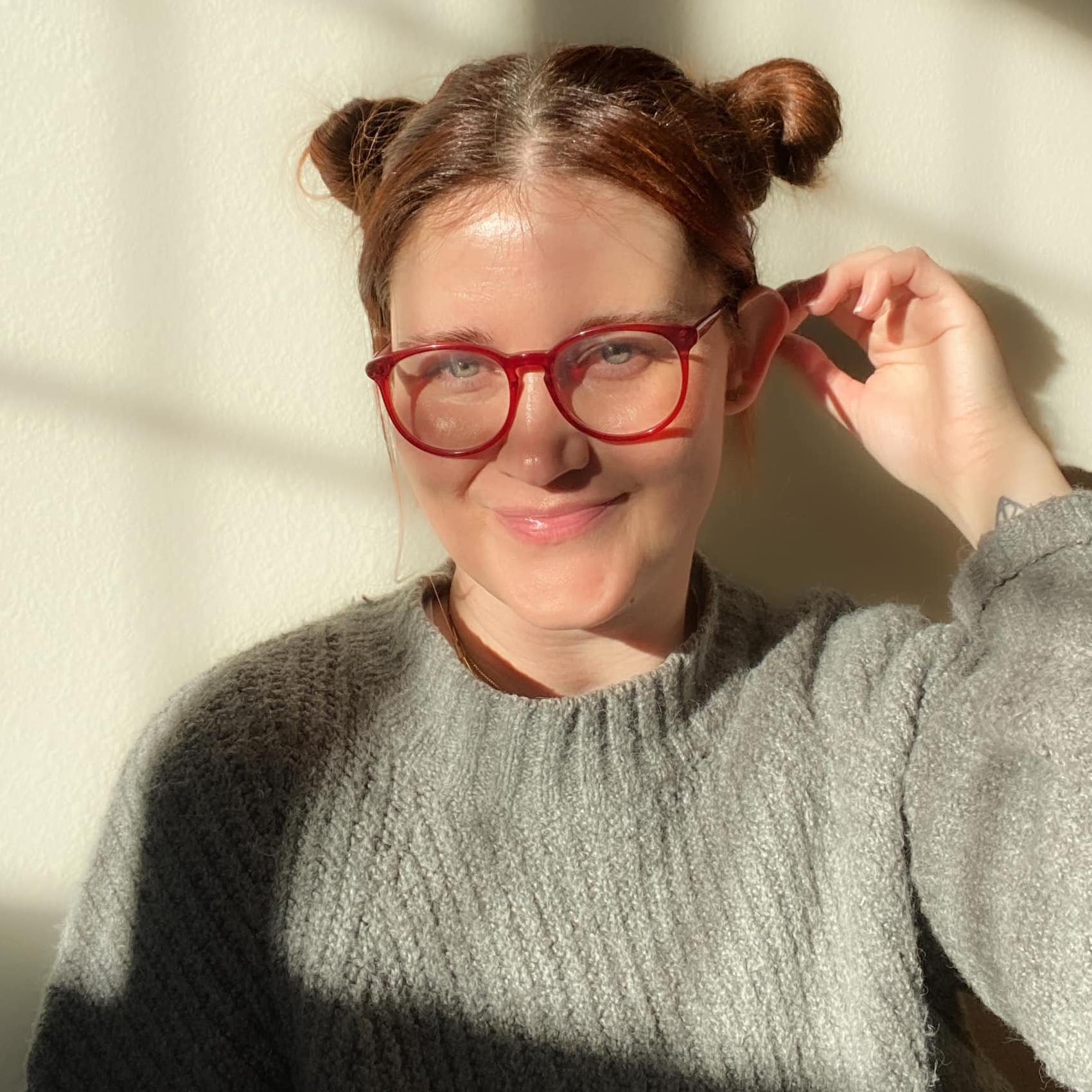
Tiffany Grimes (she/they) is the founder of Burgeon Design and Editorial, a queer founded boutique editing and design house for brave creatives. At Burgeon, we specialize in book editing, coaching, and web design for the individualists, nonconformists, and trailblazers of the literary world. If you’re a maverick, outsider, rebel, renegade, dissenter, disruptor, or free spirit, you’ve come to the right place.